

Pollination is natural process but quite a along time we have been doing it through artificially induced method in orer to bring desired genetic variation. In this blog I would be writing about the natural methods of pollination in plants. It is of two types:-
1 Self Pollination
2. Cross Pollination
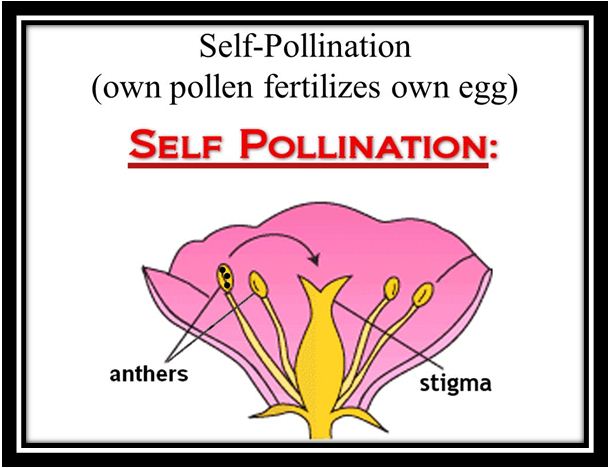
Self Pollination
“When the pollen is transferred from the anthers of a flower to the stigma of the same flower, it is called as self- pollination.“
This form of pollination is common in hermaphrodite or dioecious plants which contain both male and female sexual parts on the same flower.
Some plants reproduces through self-pollination, which means the flower can actually pollinate itself so that all the offspring are identical. Living species are designed to ensure survival of their progeny; those that fail become extinct. Genetic diversity is therefore required so that in changing environmental or stress conditions, some of the progeny can survive. Self-pollination leads to the production of plants with less genetic diversity, since genetic material from the same plant is used to form gametes, and eventually, the zygote.
Self Pollination can be further divided into two types:-
- Autogamy
- Geitonogamy
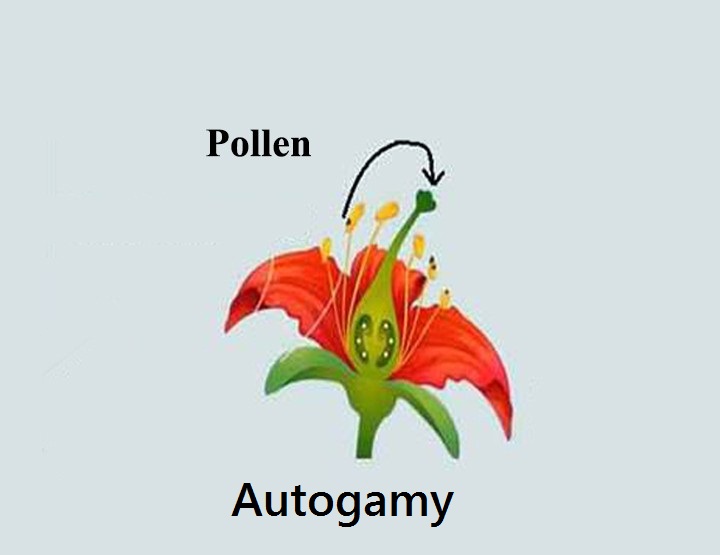
- Autogamy– In this type of self-pollination, the pollen is transferred from the anthers of one flower to the stigma of the same flower.
EXAMPLE– Sunflowers, orchids, peas and tridax are examples for autogamy.
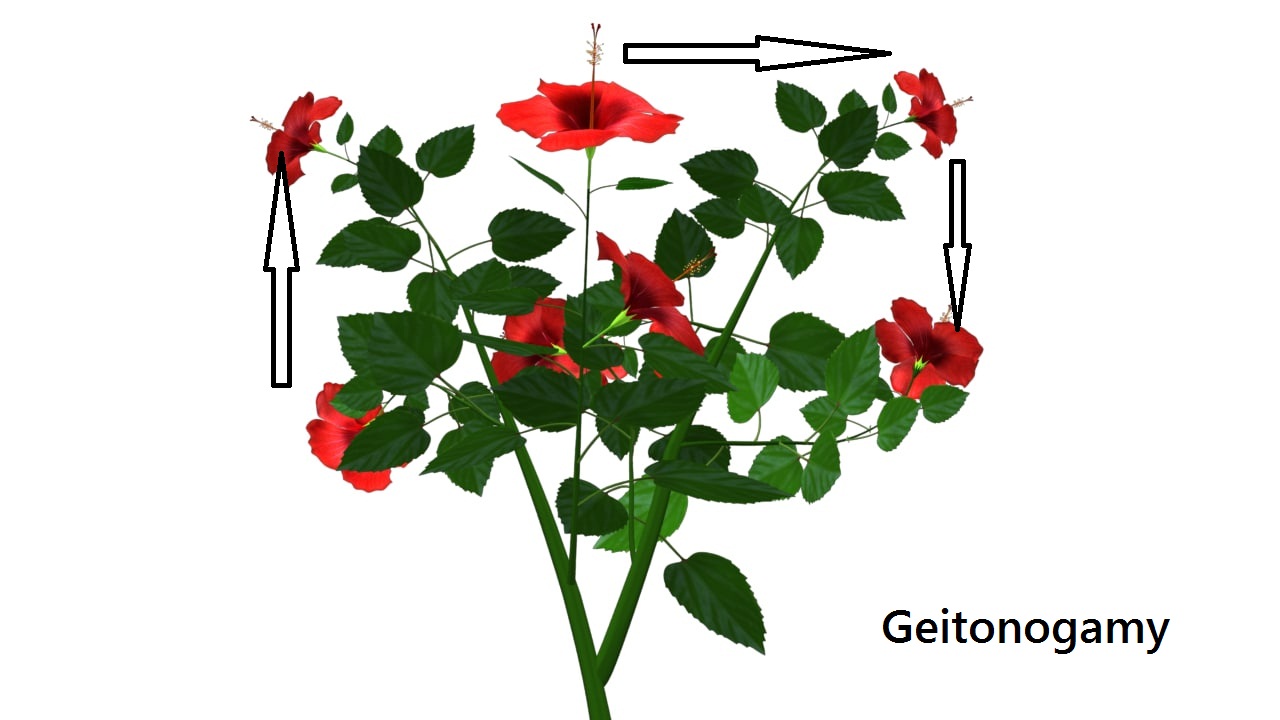
Geitonogamy– It is a type of self- pollination, the pollen are transferred from the anthers of one flower to the stigma of another flower but on the same plant. Monoecious plants which contain both male and female flowers in the same plant undergoes geitonogamy. As mentioned earlier, flowers using geitonogamy depend on the external pollinating agents like wind, insects, and animals.
EXAMPLE– Corn is the most common example of geitonogamy flowers. Geitonogamy is involved in the production of genetically similar offspring to parent.
The main difference between autogamy and geitonogamy is that Autogamy occurs when the pollen grains from the anther of the flower are deposited on the stigma of the same flower, while Geitonogamy occurs when the pollen grains from the anther of one flower are deposited on another flower of the same plant.
 Explore the World of Biology