
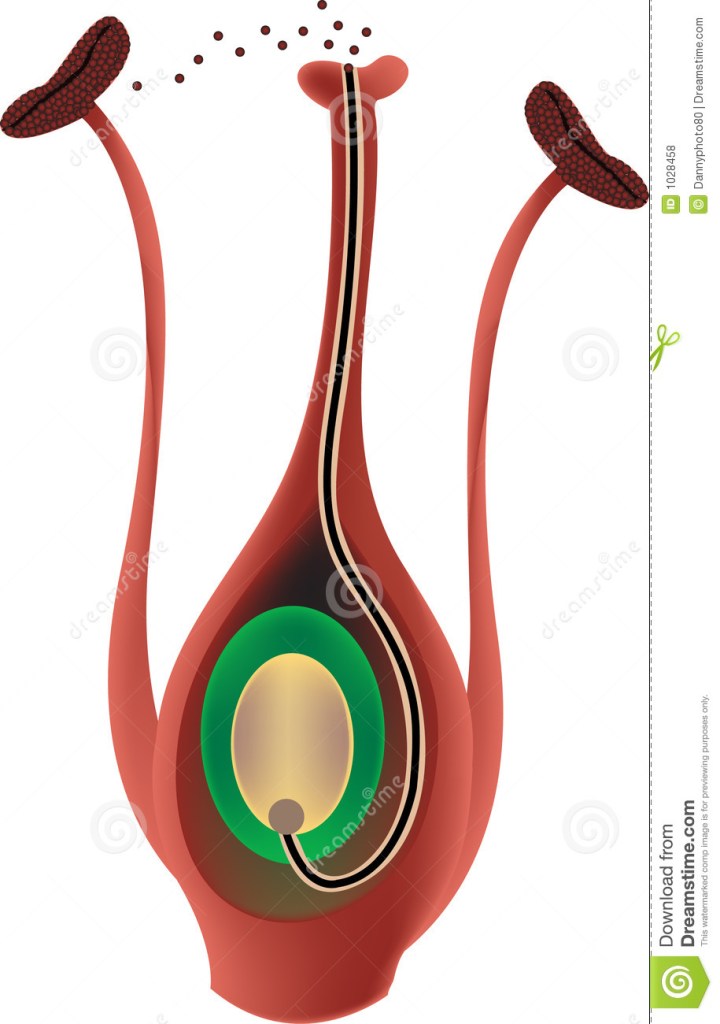
For many poeple, pollen might just be a trigger for sneezing and watery eyes. But for plants, it’s a vital ingredient in the reproductive process. Explore plant fertilization through this blog.
Plant fertilization is the union of male and female gametes (reproductive cells) to produce a zygote (fertilized egg).
So, how does fertilization occur? It’s a pretty straight-forward process that’s similar for both flowering plants (Angiosperms) and seed-bearing plants (Gymnosperms). Fertilization in flowering plants was discovered by Ralph B. Strassburger in the year 1884.
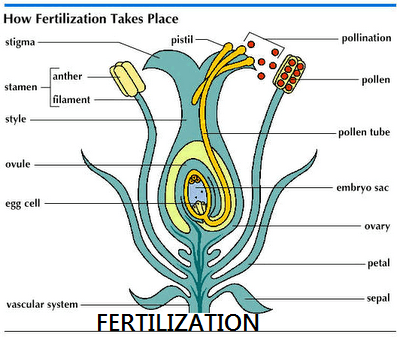
Let’s break the fertilization process down into four generalized steps.
Step 1: Pollination
In general, male gametes are contained in pollen, which is carried by wind, water, or wildlife (both insects and animals) to reach female gametes. The pollen is deposited on a plant’s stigma, which is part of the pistil (the elongated part of a flower extending from the ovary). This process is called pollination.
Step 2: Germination of pollen
Within a few minutes, pollen tubes begin growing, or germinating, toward the egg cell. These tubes will provide a path for the sperm carried in the pollen to reach the egg.
Step 3: Penetration of the Ovule
The pollen tubes penetrate the ovule, which contains the female gametes.
Step 4: Fertilization
Sperm travel down the pollen tubes and fertilize an egg. Most angiosperms undergo double fertilization, where both an egg and the polar nuclei in the embryonic sac are fertilized.
 Explore the World of Biology